> For the complete documentation index, see [llms.txt](https://docs.voiceb.ai/llms.txt). Markdown versions of documentation pages are available by appending `.md` to page URLs; this page is available as [Markdown](https://docs.voiceb.ai/product-updates/december-2025-voiceb.ai-product-release.md).
# December 2025 — VoiceB.ai Product Release
By Alex Bisbe. December 30th 2025.
December was not about shipping shiny features. It was about **consolidation, positioning, and infrastructure readiness**. We tightened the stack and clarified where VoiceB is heading.
***
#### 🚀 WebRTC VoIP Channel (Now the Default)
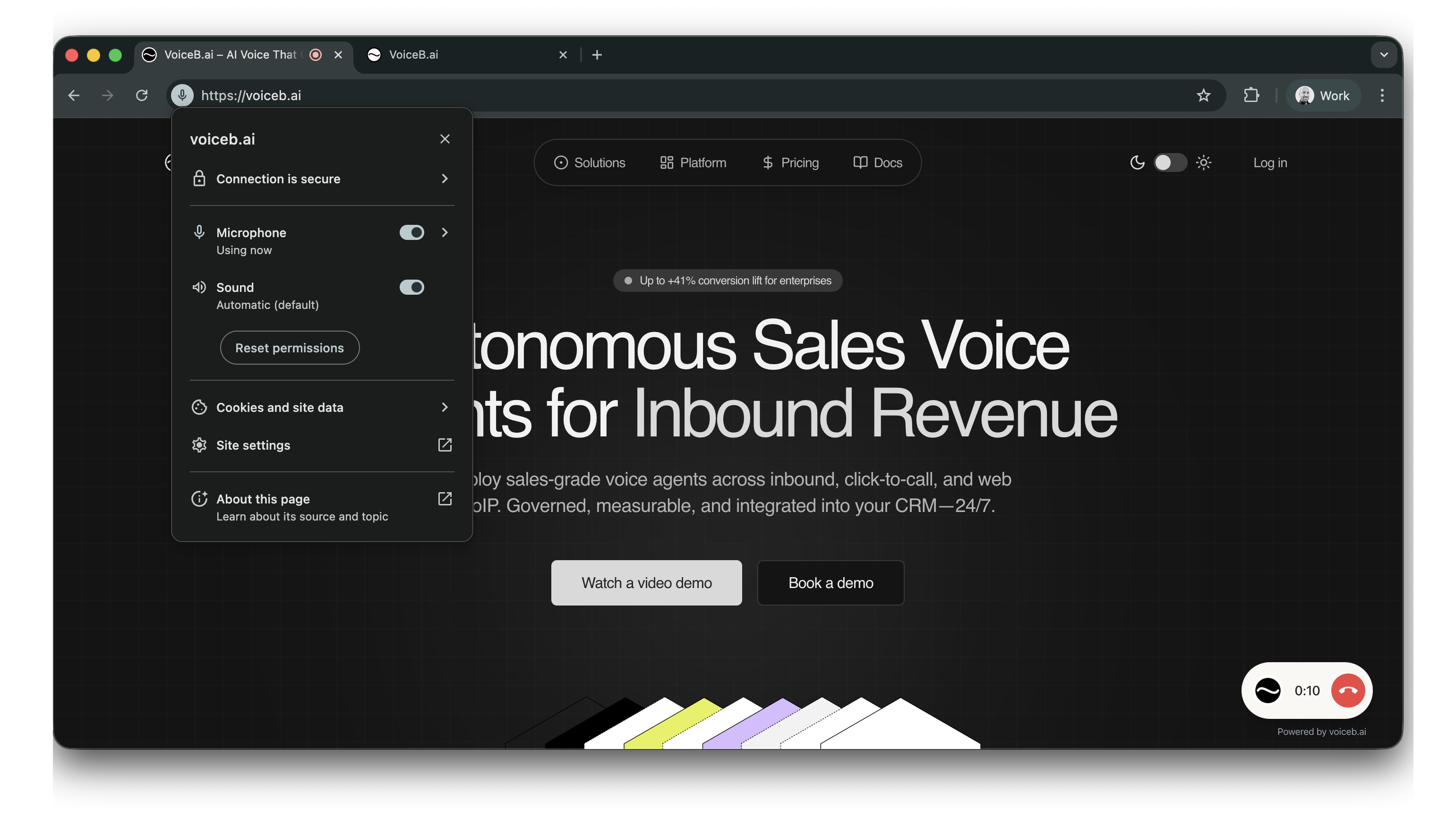
The **WebRTC VoIP channel** is now fully production-ready and positioned as the **default voice channel** across VoiceB.
**What this delivers**
* Click-to-Call from any digital journey
* Inbound VoIP numbers
* Pure VoIP channels, browser-native
* Lower latency, higher audio quality, zero telco friction
This is the foundation for scalable, conversion-driven voice.
***
#### 🧩 New Widget Configuration (VoIP-Only by Design)
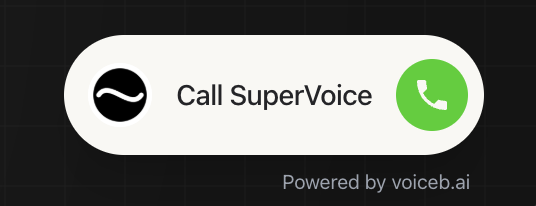
We rolled out a **new VoiceB Widget**, redesigned with a clear stance: **VoIP first, phone second**.
**Key improvements**
* Unified widget for all WebRTC use cases
* Cleaner UX, faster load, improved mobile behavior
* Native SuperVoice support
* Built to scale across agents, languages, and industries
Legacy phone widgets are no longer the reference model.
Know more, [click here.](https://docs.voiceb.ai/new-voiceb-web-widget-and-webrtc-voip-channel)
***
#### 🧠 SuperVoice vs Traditional Phone Channels (Strategic Clarity)
Let’s call it out clearly.
**Phone channels**
* Reactive and interruptive
* Expensive and capacity-bound
* Optimized for support, not revenue
**SuperVoice (WebRTC)**
* Embedded directly in the digital funnel
* Proactive guidance at decision points
* Unlimited concurrency
* Designed to **increase conversion and lead quality**
SuperVoice is not “AI answering calls”.\
It’s **AI voice acting inside the buying journey**.
🚗 Example of SuperVoice for automotive [here](https://docs.voiceb.ai/blog/supervoice-video-demo-for-automotive).
***
#### 👩🏻💻📲 VoIP-to-Phone Transfer
VoiceB now supports **VoIP-to-phone call transfer**, allowing conversations to **start in WebRTC and seamlessly escalate to human agents on regular phone lines**.
This widens the funnel with low-friction VoIP entry while ensuring that only **qualified, high-intent conversations** reach the call center—combining AI scalability with human closing power.\
\
Know more about Call Transfers: [here](https://docs.voiceb.ai/call-transfer-redirect-calls-to-a-human-agent).
***
#### ⚙️ Platform Hardening & Operational Control
Behind the scenes, December focused on control and reliability:
* Clearer separation between **agent logic** and **channel execution**
* Safer configuration and save flows
* Better version visibility and deployment confidence
* Reduced operational risk in high-volume environments
Less friction. More predictability.
***
#### 🔜 What’s Next
No ambiguity on direction:
* **VoIP over API** (programmatic VoIP channels)
* Deeper SuperVoice analytics tied directly to revenue KPIs
* Vertical-specific SuperVoice templates
* Expanded enterprise governance and controls
***
#### Bottom Line
December was about **locking the voice infrastructure**.
VoiceB already operates as an API-driven platform.\
With WebRTC VoIP now solid and VoIP on API coming next, we’re turning VoiceB into the **programmable voice layer for inbound sales**.
We’re not evolving call centers.\
We’re building what replaces them.
---
# Agent Instructions
This documentation is published with GitBook. GitBook is the documentation platform designed so that both humans and AI agents can read, navigate, and reason over technical content effectively. Learn more at gitbook.com.
## Querying This Documentation
If you need additional information that is not directly available in this page, you can query the documentation dynamically by asking a question.
Perform an HTTP GET request on the current page URL with the `ask` query parameter, and the optional `goal` query parameter:
```
GET https://docs.voiceb.ai/product-updates/december-2025-voiceb.ai-product-release.md?ask=&goal=
```
`ask` is the immediate question: it should be specific, self-contained, and written in natural language.
`goal` is optional and describes the broader end goal you are ultimately trying to accomplish on behalf of the user. GitBook uses it to tailor the answer towards what is most useful for that goal.
The response will contain a direct answer to the question and relevant excerpts and sources from the documentation.
Use this mechanism when the answer is not explicitly present in the current page, you need clarification or additional context, or you want to retrieve related documentation sections.